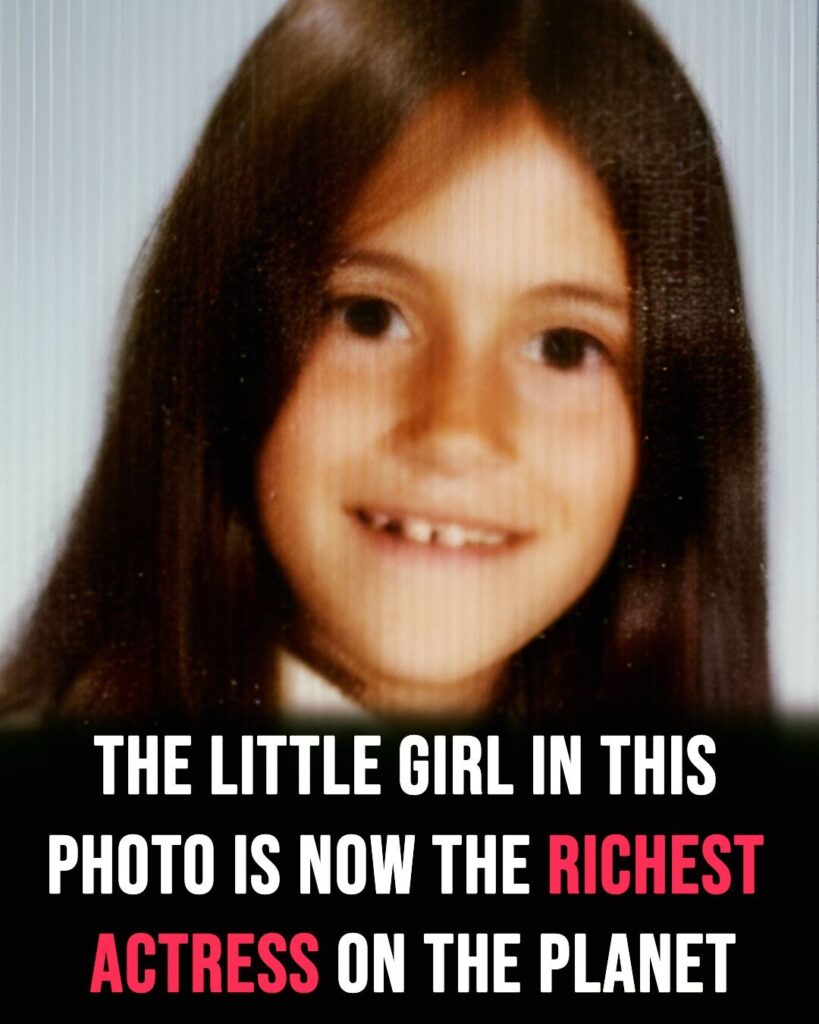
A single childhood photograph can sometimes hold a secret no one could ever guess. In this case, the image shows an ordinary little girl, smiling softly, unaware that her future would defy nearly every assumption people make about Hollywood success. She did not grow up surrounded by luxury or famous connections, nor did she dream of becoming a billionaire. Her early life unfolded in suburban Glenview, Illinois, far from flashing cameras and velvet ropes. Her father worked as a builder and contractor, and she attended public schools, living a life that looked remarkably like that of millions of other American families. Nothing in those early years suggested global wealth or a place in the history books. Yet fate has a way of choosing unlikely paths. A nationwide talent search would unexpectedly pull her into acting, setting her on a course that gave her fame early but, more importantly, taught her lessons about money, independence, and self-worth long before most people her age even thought about adulthood.
As a teenager, she was suddenly “thrown right in,” discovering what it meant to work professionally, earn a serious income, and be responsible for herself in ways that reshaped her family dynamics. When she said that at sixteen she made more money than her father, it was not a boast but an honest reflection of how quickly life can change when opportunity arrives early. Throughout the 1980s, audiences came to recognize her face in films that later became cultural touchstones. These were not just box-office hits but movies that lodged themselves into collective memory, replayed on televisions for decades and quoted by generations who grew up with them. Her performances felt warm and accessible, the kind that made viewers feel like they knew her. She also appeared on television, slipping easily into sitcom worlds that rewarded timing and relatability. By the early 1990s, she had built a solid, respected acting career—one that many would have tried to push into superstardom at any cost.
What makes her story so unusual is not the success she achieved early, but the success she chose not to chase later. While others pursued constant visibility, she stepped back. She did not crave relentless publicity, nor did she measure achievement by headlines or award-season buzz. Instead, she valued stability, privacy, and a life that could endure beyond the fleeting highs of fame. This decision often confuses people, because Hollywood narratives teach us that more attention is always better. For her, the opposite was true. By avoiding the exhausting cycle of self-promotion, she preserved a sense of normalcy and control that allowed her to think long-term. It was also during this period that she met a young financier who would later become her husband. When they met, he was not wealthy, not powerful, and not yet a figure anyone outside financial circles would recognize. She was the established professional, earning more and paying for their early milestones together. Their relationship formed not around status, but around shared values, trust, and ambition.
Marriage did not mark the end of her influence but the beginning of a different kind of partnership. While she focused on raising their four children and building a grounded family life, her husband’s career expanded dramatically. He co-founded Apollo Global Management, which grew into one of the most powerful private equity firms in the world, and later co-founded Ares Management. These ventures reshaped industries, moved billions of dollars, and placed their family among the wealthiest in entertainment and finance combined. Yet even as their financial footprint expanded, she remained actively involved, not as a silent observer but as a strategic partner. She understood money early, respected its power, and believed it carried responsibility. This mindset shaped how their wealth was managed and how it would eventually be shared beyond their own lives. Her background in acting, often dismissed as irrelevant to business, actually gave her a sharp sense of people, risk, and long-term thinking.
Philanthropy became a defining part of their shared identity. Their foundation supports the arts, education, healthcare, and Jewish organizations, reflecting both personal values and a belief in giving back with intention rather than spectacle. In 2012, they were recognized as the year’s top charitable donors after contributing more than ten million dollars, though even this recognition did not turn them into publicity seekers. She also serves on the board of the Melanoma Research Alliance, channeling resources into research that can save lives. These efforts underscore a quieter philosophy of success: wealth is not an end point but a tool. Public assumptions often reduce her fortune to her husband’s achievements, a narrative she has consistently and calmly corrected. She has reminded people that when they met, she was the breadwinner, and that their life was built together, step by step, long before billion-dollar valuations existed.
Today, at sixty, she holds a title few would have predicted: the richest actress in the world. Known to many for roles in films like Twister and The Lost Boys, and for appearances on beloved television comedies, she remains instantly recognizable yet refreshingly unpretentious. Her wealth did not come from chasing every role or clinging to fame, but from smart choices, partnership, patience, and perspective. Her story challenges the idea that visibility equals value and that success must be loud to be real. Instead, it shows that influence can be quiet, power can be shared, and legacy can be built far from the spotlight. The little girl in that photograph did not just grow up rich; she grew up intentional. And in doing so, she redefined what it truly means to win in Hollywood and beyond.